dsh-opinionated-subagent
在终端中运行以下命令:
dsh plugin install dat-lequoc/dsh-opinionated-subagent
将以下提示词粘贴到 DeepSeek Harness 对话框中:
在 DeepSeek Harness 中运行 dsh plugin install dat-lequoc/dsh-opinionated-subagent 安装本插件,源码地址:https://github.com/dat-lequoc/dsh-opinionated-subagent
插件介绍
The stock subagent tool in DeepSeek Harness accepts only a description and a prompt. A child silently inherits the parent model and reasoning effort, and there is no parameter to override either. If a delegated task should run on a faster or cheaper model, the only lever is switching the parent, which is rarely practical. Steering is even worse: the native send_message routes through the followup channel, so a correction aimed at work in flight waits for the entire current turn to finish before landing. In a measured session a steer accepted at plus 7.4 seconds was not consumed until plus 54.9 seconds, a 47.5-second stall on a simple counting task.
dsh-opinionated-subagent replaces the subagent frontend. The model argument becomes required, and its enum is the allowlist you maintain under Settings, Plugins. Reasoning effort is pinned per route and validated against the exact model before any provider call; an unadvertised effort id is refused outright rather than clamped to a nearby value. For steering, the plugin calls Agent steer for a running direct child so a correction joins the turn in progress at the next step boundary instead of queueing behind the full turn. Every subagent call renders a one-line route summary in the transcript, so you never need to read the session log to confirm which model the child actually ran on. All configuration is re-read at every tool call, so an edit applies to the next delegation with no restart.
It is built for teams running mixed-model workloads where the main agent needs deep reasoning but delegated subtasks should run on lighter or domain-specific models to control cost and latency. It is also for anyone with a hard policy against silent inheritance: an empty allowlist unregisters the tool entirely rather than falling back to the parent model, and the prompt still states the refusal reason so the model can explain it to the user. The plugin is opt-in by design; a fresh install behaves identically to the stock tool until you remove the seeded inherit/current entry and add your own routes.
使用场景
- 主代理使用深度推理模型,子任务交给轻量模型以控制成本与延迟
- 团队需要禁止子代理静默继承父代理模型,实施显式路由策略
- 运行中的子代理需要即时纠偏,而非等待整轮结束才生效
适合人员
- 运行多模型工作流的 AI 工程团队
- 有严格模型路由与合规策略的多租户平台
- 需要控制子代理推理力度与调用成本的独立开发者
相关插件
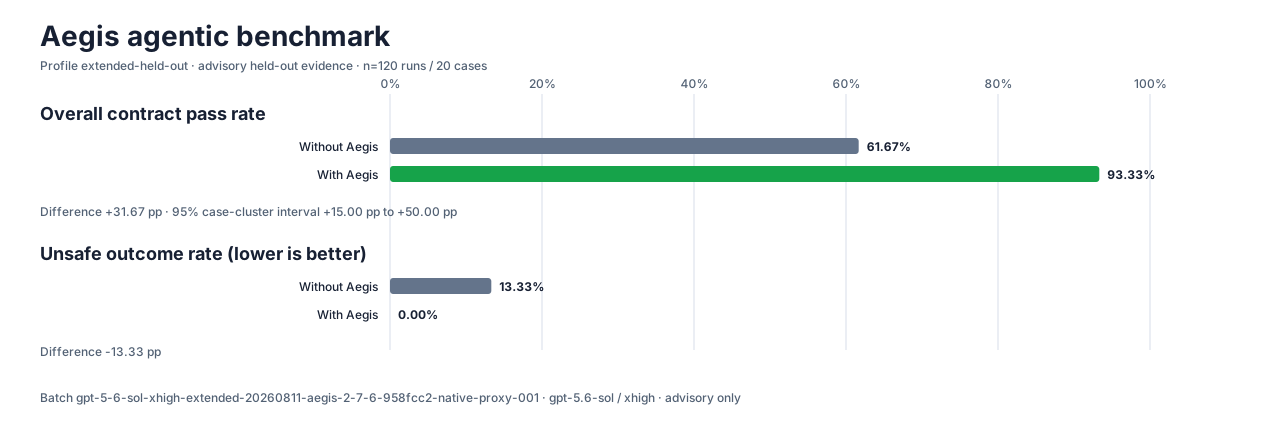
让 AI 编程代理更可信:编辑前对齐真实基线、完成时附验证证据,减少返工与不安全变更。
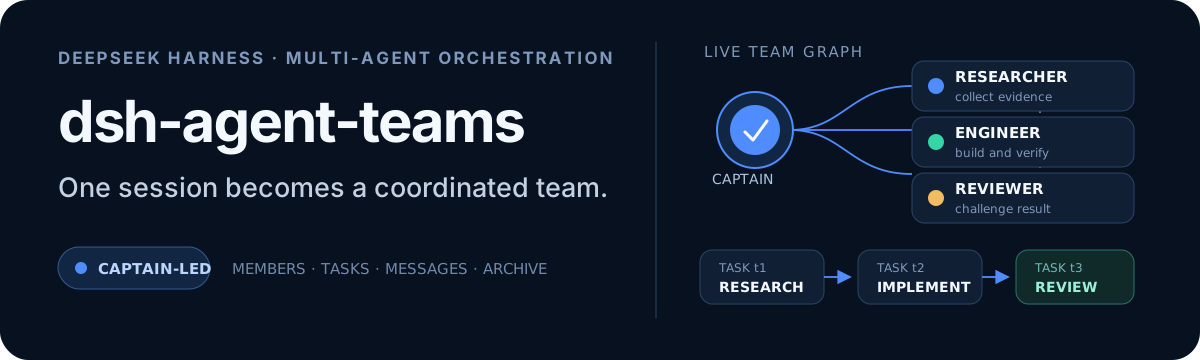
将 DeepSeek Harness 会话变为队长,创建持久子代理团队,将目标拆分为依赖感知任务,并通过直接消息与 Web UI 协调执行。
为编码智能体赋予设计判断力,让 Claude Code、Cursor 等 70+ 智能体直接在终端生成与迭代高质量 UI、演示文稿和图形。
让 Pi 生态的插件无需修改即可运行在 DeepSeek Harness 上,通过实现 Pi 公共扩展 ABI 的兼容层桥接两大生态,并检验 DSH 架构能力。